
I have been an artist from a very early age. My art is very personal to me and often reflects what life is like for me at a given time. It has helped me coming out of my shell and process sometimes difficult circumstances in my life.
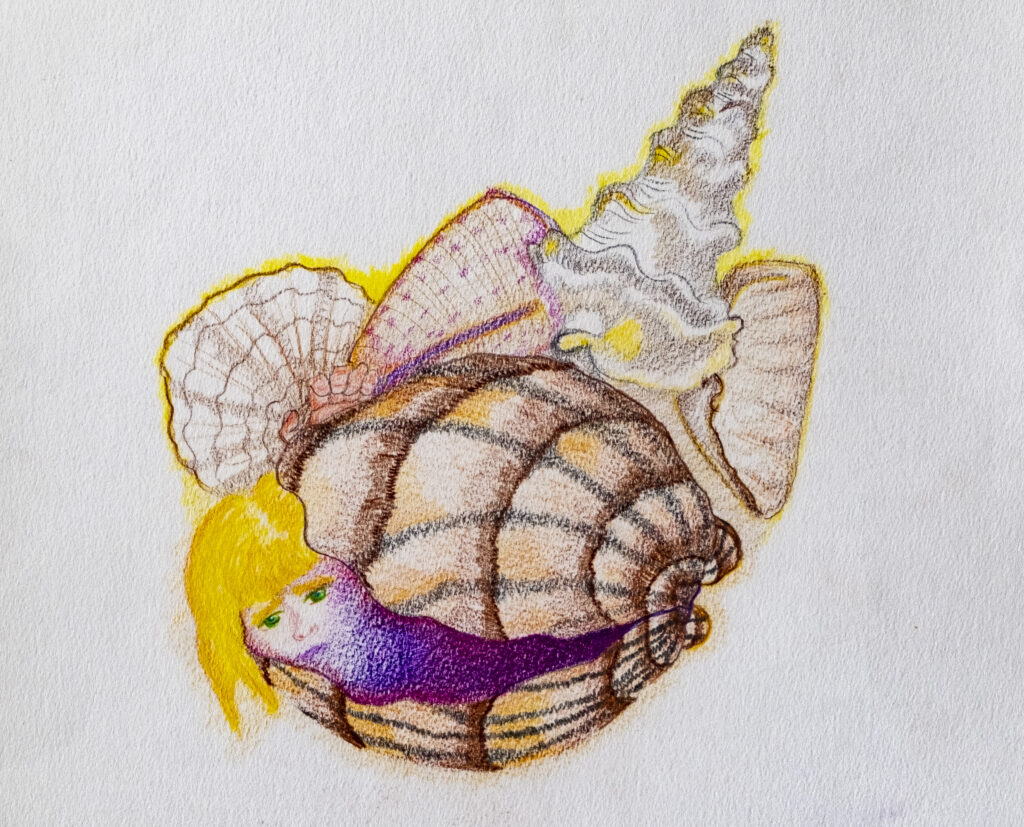
Let me tell you a little bit about myself.
Ever since I can remember, I have been a creative soul. The genes come from both of my parents, but neither of them ever got a chance to pursue their own talents. My father had a job in accounting, my mother was what they now call ‘a home-maker’. She was also a great seamstress, knitter and ‘needle-pointer’, she played the accordion and in her younger years she even picked up drawing. My father had a good eye for photography, he played the guitar and both parents gave us a pencil and a piece of paper whenever we told them we were bored and had ‘nothing to do’. It paid off. Both my sister and I enjoy drawing and to this day it is hard for me to imagine a family life without creative activities.

I have always been self-taught. I never did any formal art or photography education. Why not, you may wonder. Well, the truth of the matter is that I was always bullied at all my schools. As a result I discovered how to fly under everyone’s radar. For the longest time this survival strategy made me invisible to the world. When I turned twenty, the last thing I wanted, was to go to yet another school or college and expose myself to more pestering. I was elated when, at age 19, I could ‘finally’ step out into ‘the real world’, leaving school behind to start working. I became a photo-journalist at local and regional newspapers and it was a great way to hone my visual and verbal instincts. It also helped me restore my trust in other people.
From film to digital to mirrorless to paint
I am, by nature, an inquisitive, sensitive and perceptive person. Journalism gave me the professional licence to ask any question and… always get answers. Getting the image with the story just right, was always more important to me than getting the scoop. I remember getting a tip about a truck that had crashed and was dangling from the edge of a local quarry. No-one got hurt but I instantly understood that there might be some nice photographs to take…There were large silo’s at ground level of the quarry area and I decided that the best shot would be from the top of one. So, I climbed it, after making sure nobody saw me. It was easy as I was the first one at the scene. I got super shots and waited for everyone (lots of emergency vehicles, onlookers etc) to leave, before I climbed down. The next day my pictures were published and my fellow journalists all wondered where the hell I had been to get those wonderful shots… I like that kind of thing: do the unexpected or daring thing. Not always the most safe way to lead a life, but certainly adventurous. And hey, I am still here, in my mid-sixties, and going strong 🙂 and I don’t shy away from adventure!
I never traveled anywhere without a camera since that first day in my first job. In this era of portable devices, my iPhone has taken center stage over the ‘real’ camera. If I want to create a snapshot of a moment in life, it works just fine. But I still reach for my trusted cameras, when I want something of better quality and more depth. I used to shoot film, then I went digital and after lugging around kilos of equipment during many of my travels, I now mostly work with a featherlight mirrorless camera system. I love how it combines the power of creativity with technology. My preferred brand: Fuji. For its excellent colour rendering in their JPG pictures, and the depth of detail in their RAW
images.
From creative to technical: how is that possible?
After 15 years, I left the world of professional photo journalism. It became too commercial and something else started to fascinate me: I made a career change to become an IT specialist with focus on a particular platform for custom database solutions. It seems like a total 180 from creative work, but in fact there are many similarities. For one, it has a lot to do with pattern searching and logic. In photography as with painting, I have discovered, you also need logic and the ability to search for patterns. So saying photography, art and IT in the same breath makes a lot of sense to me.
Fascinated by the painting process
My career change did not mean I abandoned photography. I still rarely go out without having some sort of camera with me. When I discovered, almost ten years ago now, what the power of painting was, photography took a second seat though. I was instantly grabbed by the possibilities. It was unexpected. For the longest time I was used to working with pencil and ink and colour never came into it. I still have a long road of learning ahead of me when it comes to the many technical aspects of setting up a painting and the art of using colour. But I love it. It is one of the few activities in my life that brings me into a state of serenity and happiness. And most of all: intense gratitude for being able to do it and take the time to grow.
Planning a painting: it’s a real thing
As a child, I thought that people who were artistic painters worked like this:
They had an idea, were inspired by something, grabbed a canvas, threw some paints on it, moved a brush around and magically produced a masterpiece.
Nothing is further from the truth, I know that now!
Some great artists do develop the ability to work at super speed. They have a raw sketch and take it from there. Most, however, plan ahead up to the point of engineering the process. And with acrylic paints, planning is an essential part of the process. Or, to use the words of a great contemporary painter I took some courses with:
“Never sit down and just start painting, trusting your abilities. Always make a plan about the way you want to tackle the image. Every brushstroke needs to be intentional and have something to say.”
I could not agree more.
Oils versus acrylics
I do not use oils. I never had the luxury of a studio with top-air cleaning mechanics. Oils are mixed with turpentine and linseed oil, which can produce a toxic environment. Also, the stories about linseed self-combusting frightened me. So I chose to work with acrylics. I found out that, in a way, it is a harder path to walk. Oils stay pliable for a long time on the palette and allow for smooth blending on the canvas. They also easily create texture and firm brushstrokes are more visible and can add to the character of the painting. Acrylics tend to be smooth and dry really fast. Adding texture requires the use of special moulding gels. More work, in other words, and work that requires more forethought. Nowadays we are blessed with open acrylics, which stay workable for a lot longer. However, still no comparison with oils (which can take weeks, sometimes months, to fully dry).

The process of working with acrylics is best served by premixing colour-sets for new work. That means the time-to-first-brush-on-canvas is fairly long. But it also means that, when the actual painting process starts, I can work quicker and more precisely. The colours and shades are all there on my palette and all I have to do is paint and that, after all, is the exciting part of it all. So how come these mixes do not dry out? I keep them in a so-called stay-wet box. It is a box that comes with an airtight lid and this can preserve my mixes for up to a month. There is more to say about this and if you are interested, contact me for more details. I am always happy to share the things I learned.
Enjoy my artistic spirit children!
You will find a mix of stories and visuals (all low resolution pictures) on this website. Use the top- and side-menu options to navigate to different categories. Or click on the links below to browse my galleries directly. I hope you enjoy what you see.
If you are interested in purchasing a particular piece, or would like a professional art print of the work, do let me know via the Contact section of my website. I would love to hear from you!